

Professional cooperation for durable transport infrastructure – 9th Hungarian Transport Conference, 50th Road Days
The 9th Hungarian Transport Conference – 50th Road Days was held in Eger from 13 to 15 October 2026. In keeping with tradition, representatives of the transport and road sector met again this year to share their experience and to look together for answers to the current challenges facing the industry.
Kovács Ákos, Chairman of the Board of Directors of FŐBER Zrt., chaired the section on one of the conference’s key topics and also took part in the programme as a speaker. Ozorák Gábor, Director of Road and Bridge Construction, also gave a presentation on behalf of our company. In connection with the topic “The warranty trap: design error or construction deficiency?”, both of them presented the factors that determine the quality and long-term sustainability of investments.
The prevention of warranty problems starts with design.
Kovács Ákos focused his presentation on the complex background of warranty failures and on cooperation between the parties involved in an investment. When assessing defects in roads, bridges and drainage systems, operational experience, traffic loads and environmental impacts must be taken into account alongside the design and construction conditions.
The presentation also addressed the challenges posed by extreme weather and growing traffic loads. Its key message was that the lessons learned from the defects identified must be fed back into the preparation and implementation of future investments. This requires clients, designers, contractors, technical supervisors and operators to work together.
Technical supervision throughout the investment process
Ozorák Gábor approached the topic from the technical supervisor’s perspective, paying particular attention to the practical challenges of municipal road development projects.
Using examples, he showed the consequences that shortcomings in preparation and construction can have, including in the placement of utility covers, the utility connections of pavements and the design of kerbs. He stressed the importance of a thorough survey of site conditions, of defining the appropriate technical content and of allowing sufficient time for design.
His recommendations included tendering contractors on the basis of detailed construction designs, ensuring continuous on-site supervision and defining long-term operational requirements at an early stage.
Thank you for the joint professional work!
As section chair, Kovács Ákos would like to take this opportunity to warmly thank all speakers for contributing to the organisation and success of the conference with their expertise, experience and active participation. The presentations by senior representatives of designer, contractor, investor, operator and technical supervisor companies added considerable value: their different professional perspectives and practical experience made for a rich dialogue and joint reflection.
This professional cooperation is particularly important for FŐBER Zrt., as it helps share experience and successfully deliver the transport investments of the future.
Városliget named Europe’s best large urban park – we are proud of our role as technical supervisor
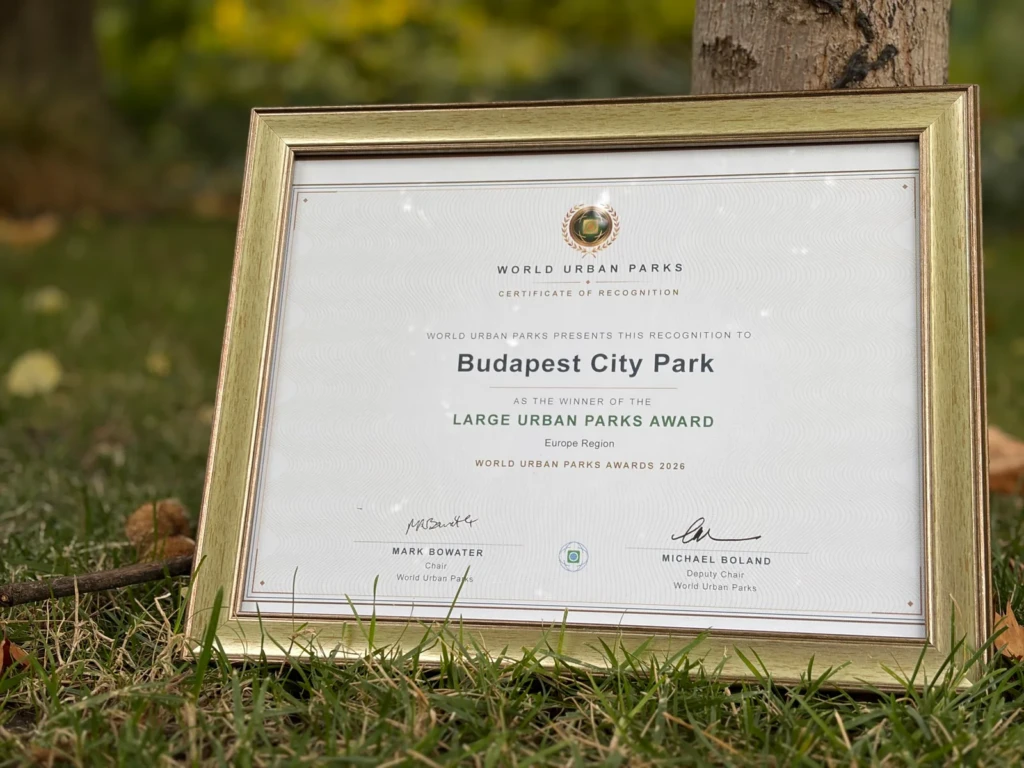
Városliget, Budapest’s City Park, has received a prestigious international award: World Urban Parks (WUP) has presented it with the 2026 Large Urban Parks Award for Europe. The recognition is a special pleasure for FŐBER Zrt., as we contributed to the renewal of Városliget as technical supervisor.
The award, presented in Istanbul, recognises the professional operation, outstanding green space maintenance and high-quality visitor experience of the almost 100-hectare Városliget. Welcoming 8–9 million visitors a year, the park today offers recreation close to nature, sports facilities, family programmes and cultural experiences all in one place.
Technical supervision for lasting quality
The aim of FŐBER Zrt.’s technical supervision work is to ensure that investments are implemented in line with the plans, the technical requirements and the specified quality. In a complex environment such as Városliget, it is particularly important to coordinate the work of the disciplines involved in construction and to monitor implementation continuously.
This recognition rewards the everyday work of the park’s maintenance and operations staff. At the same time, it is a pleasure for us to see that the renewed environment continues to serve visitors to a high standard in the long term. We are proud to have been part of this renewal through our work as technical supervisor.
A complex task, an internationally recognised result
Besides its size, Városliget stands out for the diversity of its functions. The historic park’s green spaces, playgrounds and sports facilities form a whole with cultural institutions such as the House of Music Hungary, the Museum of Ethnography, the Museum of Fine Arts and the House of the Millennium.
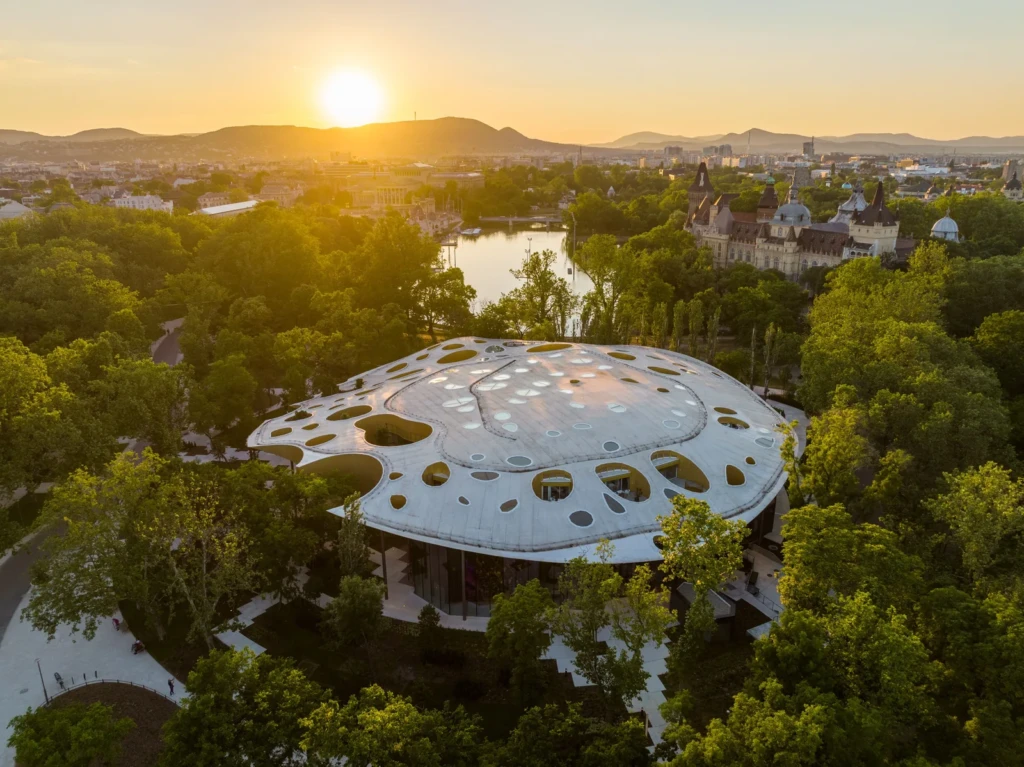
In recent years, more than 270,000 square metres of green space have been renewed. More than 70 specialists work every day to keep the park in good condition, supported by digital monitoring systems, a continuous dispatch service and modern horticultural solutions.
The 2026 awards programme of World Urban Parks, the international professional organisation, received a total of 55 nominations from five global regions. Városliget won the European award in the large urban parks category, further extending the list of international awards won by the Liget Budapest Project.
We congratulate Városliget Zrt., the specialists working on the maintenance and operation of the park, and everyone involved in its renewal! It is an honour for FŐBER Zrt. to have contributed to the renewal of Városliget with its professional work.
Source and owner of the images: Liget Budapest. Photographer: György Palkó
Ferry ports of the Szántód–Tihany crossing to be renewed
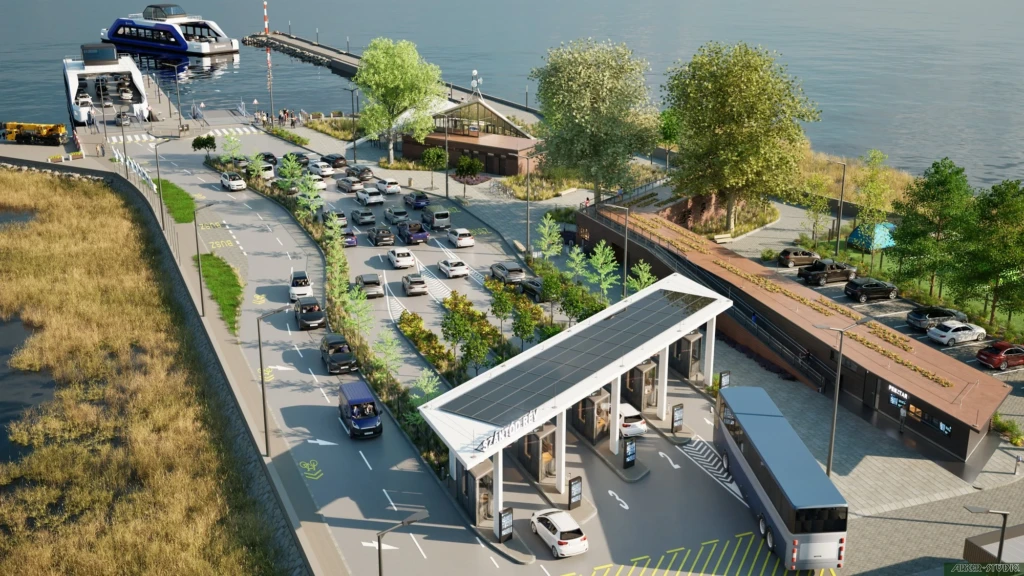
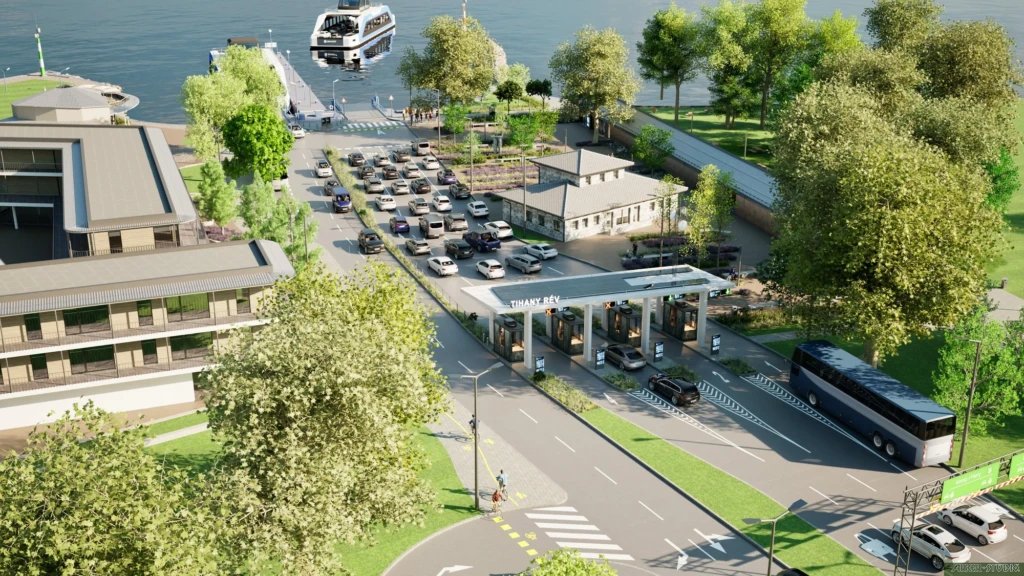
The ceremonial laying of the foundation stone in Szántód marks another milestone in the comprehensive renewal of the two ferry ports. As part of the investment of Balatoni Hajózási Zrt., more modern, accessible port infrastructure is being built in Szántód and Tihany. FŐBER Zrt. provides technical supervision services for the project.
The ferry crossing between Szántód and Tihany connects the two shores of Lake Balaton all year round. The development of the two ports is therefore significant for both the transport and the tourism of the region. The aim of the investment is to serve passengers with more modern reception areas and technical infrastructure that meets today's needs.
Comprehensive development on both shores
As part of the works, the service and reception buildings, the road and paved surfaces, the ticket booths and the entry gates will be renewed. Modern electrical, IT, fire alarm and security systems will be installed. The hydraulic engineering tasks include the reconstruction of the port basins and the reinforcement of the shore protection structures.
The plans also cover the landscaping of green areas, the creation of green roofs and street furniture, and making the areas accessible. The development thus affects both the operation of the ports and the quality of the spaces used by passengers.
The role of FŐBER Zrt. in the project
The construction is carried out by SZABADICS Építőipari Zrt. FŐBER Zrt. provides the technical supervision services related to the renewal of the Szántód and Tihany ferry ports, monitoring that the construction is carried out in accordance with the plans and the technical requirements.
The construction contract entered into force on 24 April 2026, and the work sites were handed over on 11 May 2026. The contractual completion deadline of the project is 11 November 2027.
Comprehensive railway infrastructure development in the Zalaszentiván area
A new, electrified connecting track is being built between railway lines No. 17 and No. 25
As part of this multi-disciplinary investment, a new railway track, a passenger stop and engineering structures are being constructed; in addition, the related road, utility, energy supply, telecommunications and signalling systems are being modernised.
A railway connection of strategic importance
Railway line No. 17 (Szombathely–Zalaszentiván) and railway line No. 25 (Zalaszentiván–Őriszentpéter national border) form part of the north–south railway corridor traversing Western Transdanubia.
The lines concerned form part of the trans-European TEN-T freight and passenger transport network. Therefore, in addition to regional passenger transport, the development is of key importance for cross-border rail freight traffic.
The new connecting track enables passenger trains operating between Szombathely and Zalaegerszeg, as well as the freight trains concerned, to continue their journey without having to change direction at Zalaszentiván station. This can contribute to reducing travel times, increasing the efficiency of rail transport and relieving the traffic load at Zalaszentiván station.
The project is being implemented with the support of the European Union and co-financing from the Hungarian State.
Construction of a new electrified connecting track
A key element of the development is the connecting track to be built along a new alignment beside Zalaszentiván station, between railway lines No. 17 and No. 25.
The single-track main line is being built for an axle load of 225 kN and will allow for speeds of 60 km/h. As part of the project, the existing railway track will also be partly rebuilt.
Several sets of new turnouts will be installed to establish the necessary rail connections.
Each turnout will be equipped with an electric point heating system, which supports safe and continuous rail traffic operations even in winter weather conditions.
Overhead line and power supply works
The new connecting track will be fully electrified. As part of the works, the existing overhead line system will be dismantled over a length of approximately half a kilometre, while a new overhead line network is being built.
The development includes relocating the existing phase break on line No. 17, installing two new pole-mounted transformers, and expanding and modifying the FET/HETA system that monitors the overhead line power supply.
New railway area lighting will be installed in the turnout zones at the junctions of the connecting track with lines No. 17 and No. 25, at the Szentivánvölgy stop, at the covered bicycle store and in the vicinity of the Hunyadi Street level crossing.
A new stop named Szentivánvölgy is being established
A new railway stop named Szentivánvölgy is being built on railway line No. 17, within the built-up area of Zalaszentiván. The new stop ensures that passengers on trains that use the connecting track and bypass Zalaszentiván station can reach Zalaszentiván directly.
The stop will be equipped with a passenger platform 55 centimetres above the rail head, a passenger shelter, modern area lighting and a passenger information system. Passenger safety will be served by video surveillance and further security systems.
The integration of public and sustainable transport modes is supported by a Park & Ride (P+R) car park and a covered Bike & Ride (B+R) store for bicycles. As part of the investment, pavements leading to the stop will be built and certain existing pavement sections will be renovated.
New railway bridge over the Sárvíz Stream
The planned connecting track crosses the Sárvíz Stream, and therefore a new railway structure is being built as part of the project.
During the works, the old trough bridge over the stream will be demolished. An additional railway frame bridge and a culvert will also be built as part of the project.
Development of road and utility infrastructure
The railway investment also affects the road infrastructure of Zalaszentiván. The relevant section of Zala Street will be realigned.
The Hunyadi Street level crossing and the adjoining road section will be rebuilt together with the railway tracks.
Alongside the road construction works, the affected stormwater drainage, electrical, public lighting, telecommunications and other utility networks will be modified. The necessary drinking water, sewage, stormwater, gas, electricity and telecommunications lines will be relocated or protected.
The development affects several railway level crossings. The existing single-track level crossing on railway line No. 25 will be rebuilt as a double-track crossing to match the construction of the connecting track.
Signalling and telecommunications upgrades
A comprehensive technological modernisation is being carried out in parallel with the railway track construction. As part of the investment:
- the automatic block signalling system of railway line No. 17 will be modified;
- the interlocking system at Zalaszentiván station will be expanded and modified;
- the ETCS Level 2 train control system will be modified and expanded;
- the KÖFI central traffic control system will be modified;
- level crossing barrier systems will be installed and modified;
- the railway telecommunications and passenger information systems will be upgraded.
In the station building at Zalaszentiván, the interlocking equipment room will be enlarged, the telecommunications room will be modified and the associated intrusion detection system will be upgraded.
A comb-type cable duct system will be built to accommodate the sector-specific cables, and protective conduits will also be laid.
A complex design and permitting process
Manufacturing designs, detailed designs and construction drawings are being prepared for the implementation of the investment. The tasks also include high-voltage simulations, technological instructions, material submittals, and the compilation of quality assurance and sampling plans.
Preparation of the construction work requires site organisation plans, condition survey documentation, tree-felling and phasing plans, as well as temporary traffic diversion plans.
The operator, facility manager and authority permits and approvals required for the construction of the facilities must also be obtained. Following construction, the documentation and certificates required for the occupancy, commissioning and putting-into-service procedures must be prepared.
Related regional developments
The construction of the Zalaszentiván connecting track is linked, both in location and in time, to further transport investments. Chief among these are the development of the railway infrastructure for the intermodal container terminal being built in the Zalaegerszeg and Zalaszentiván area, and the upgrading of the Szombathely–Zalaszentiván railway line, currently in the design and preparation phase, under the SPEEED UP AMBER project. These parallel investments require continuous professional consultation between investors, clients, operators, designers, contractors and engineering organisations.
The role of FŐBER Zrt. in the project
This investment, which involves numerous technical disciplines, requires high-level technical coordination and continuous professional supervision.
FŐBER Zrt. contributes to the implementation of the project as an engineering organisation, performing the engineering and technical supervision duties. Its responsibilities include overseeing the coordination of the related investments and providing professional support to the client, with particular regard to works affecting railway capacity and the continuity of operations.
With its multidisciplinary engineering experience, our company supports the cooperation of the participants in this technically complex development, the coordination of the related work processes and the implementation of the investment under appropriate professional control.
The construction of the Zalaszentiván connecting track represents a significant step forward in the development of railway infrastructure in Western Transdanubia. The new connection contributes to increasing the efficiency of passenger and freight transport, reducing travel times, and strengthening the region's domestic and international rail links.